Tribology and lubrication
We evaluate friction, wear and oil-material compatibility to analyze bearing surface behavior and lubrication margin.
R&D CENTER
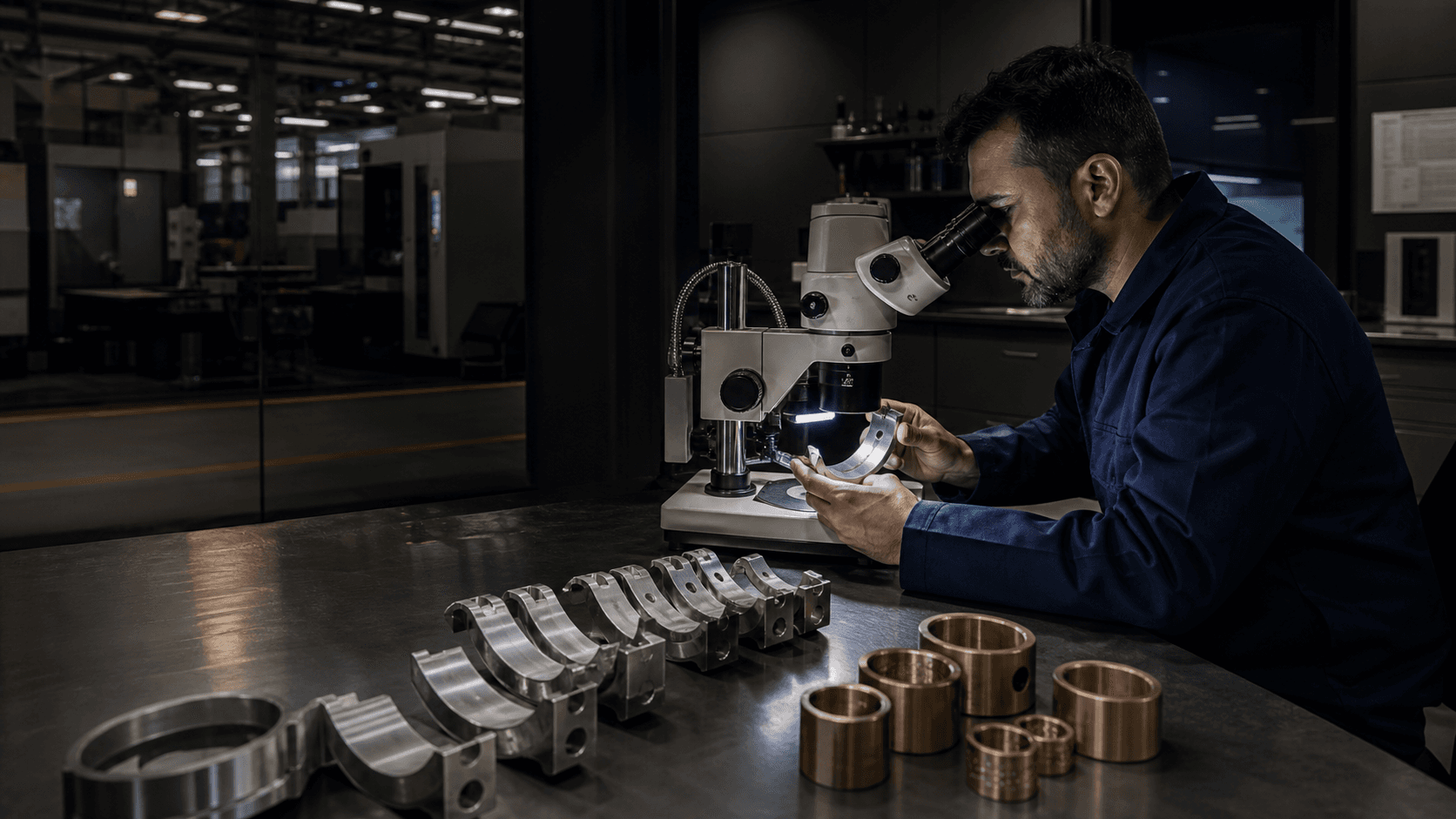
We develop multi-layer plain bearing and bushing solutions for application requirements by combining tribology, material science, design simulation and validation testing.
ENGINEERING INSIDE THE PRODUCT
Bearing and bushing performance is not defined by one material. The backing, bond layer, running surface, geometry and oil film work as one system, and our development decisions consider the whole system.
Load + speed
Application profile
Oil + temperature
Tribological condition
Clearance + form
Geometric control
Wear, friction and start-up behavior
Balance of load capacity and embeddability
Metallurgical integrity between layers
Geometric stability and housing fit
Tribology
Friction, wear and lubrication
Materials
Multi-layer structures
Simulation
Design and load analysis
Validation
Testing and field feedback
OUR APPROACH
Performance in engine bearings and bushings is defined by evaluating material selection, geometry, lubrication conditions and duty cycle together. Our R&D center operates with this holistic perspective.
Like R&D organizations at leading bearing manufacturers, we run application analysis, material characterization, prototype development and validation testing in an integrated process. The goal is to reliably define the right bearing solution for each engine and operating condition.
For crankshaft, connecting rod, camshaft, piston pin and auxiliary shaft solutions, we address both serial production needs and project-based custom development with the same engineering discipline.
COMPETENCIES
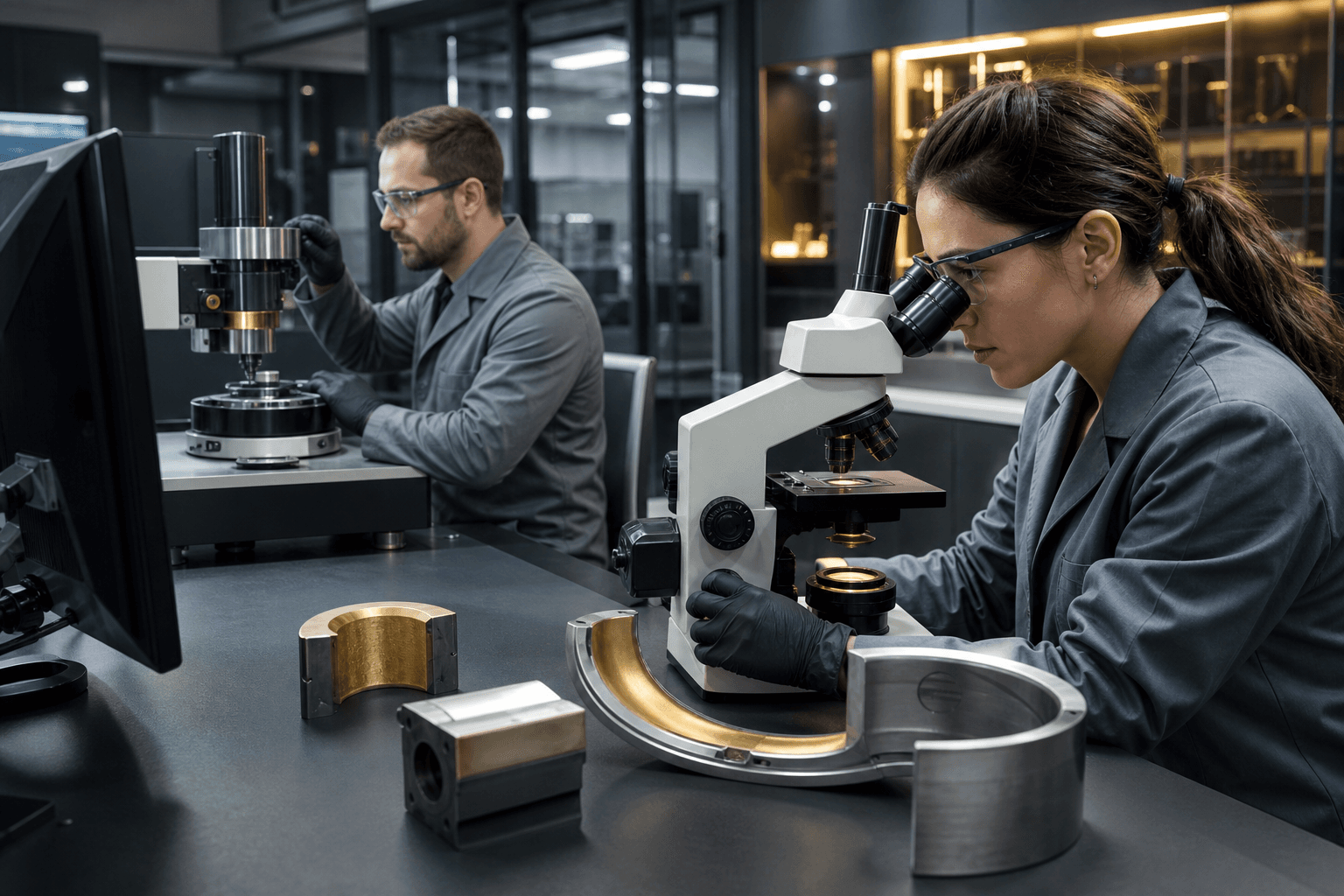
We evaluate friction, wear and oil-material compatibility to analyze bearing surface behavior and lubrication margin.
We examine bond interface, microstructure and surface properties in multi-layer structures such as steel-backed bronze, aluminum-tin and white metal.
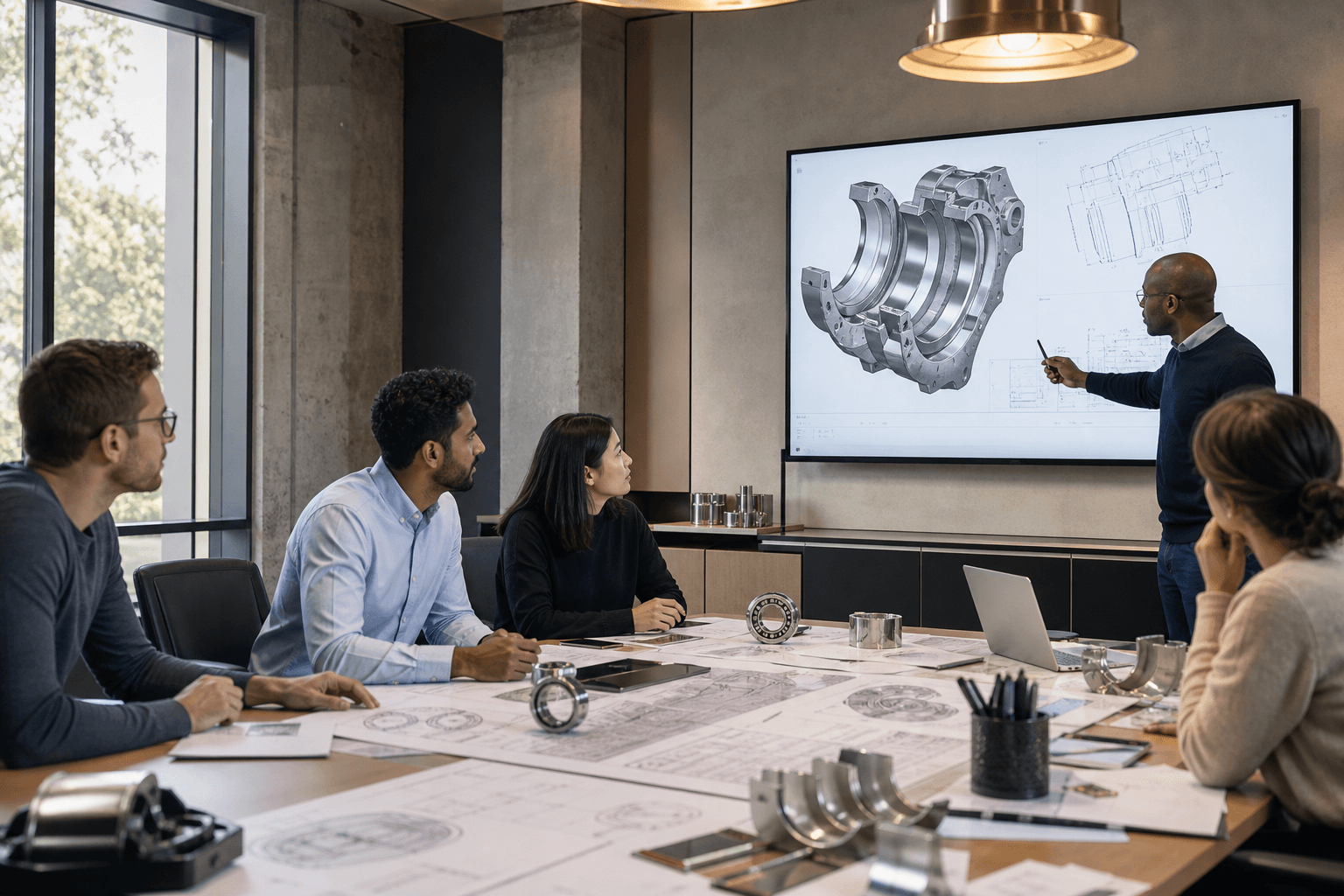
We assess design alternatives before application through load-speed diagrams, clearance tolerances and thermal behavior.
We materialize solutions through rapid prototype production and pilot trials from custom geometry, OEM reference or samples.
We validate prototype performance before serial production with material, dimensional, metallurgical and endurance-focused tests.
We align bearing/bushing selection with customer and OEM requirements based on engine type, duty cycle and assembly conditions.
DEVELOPMENT PROCESS
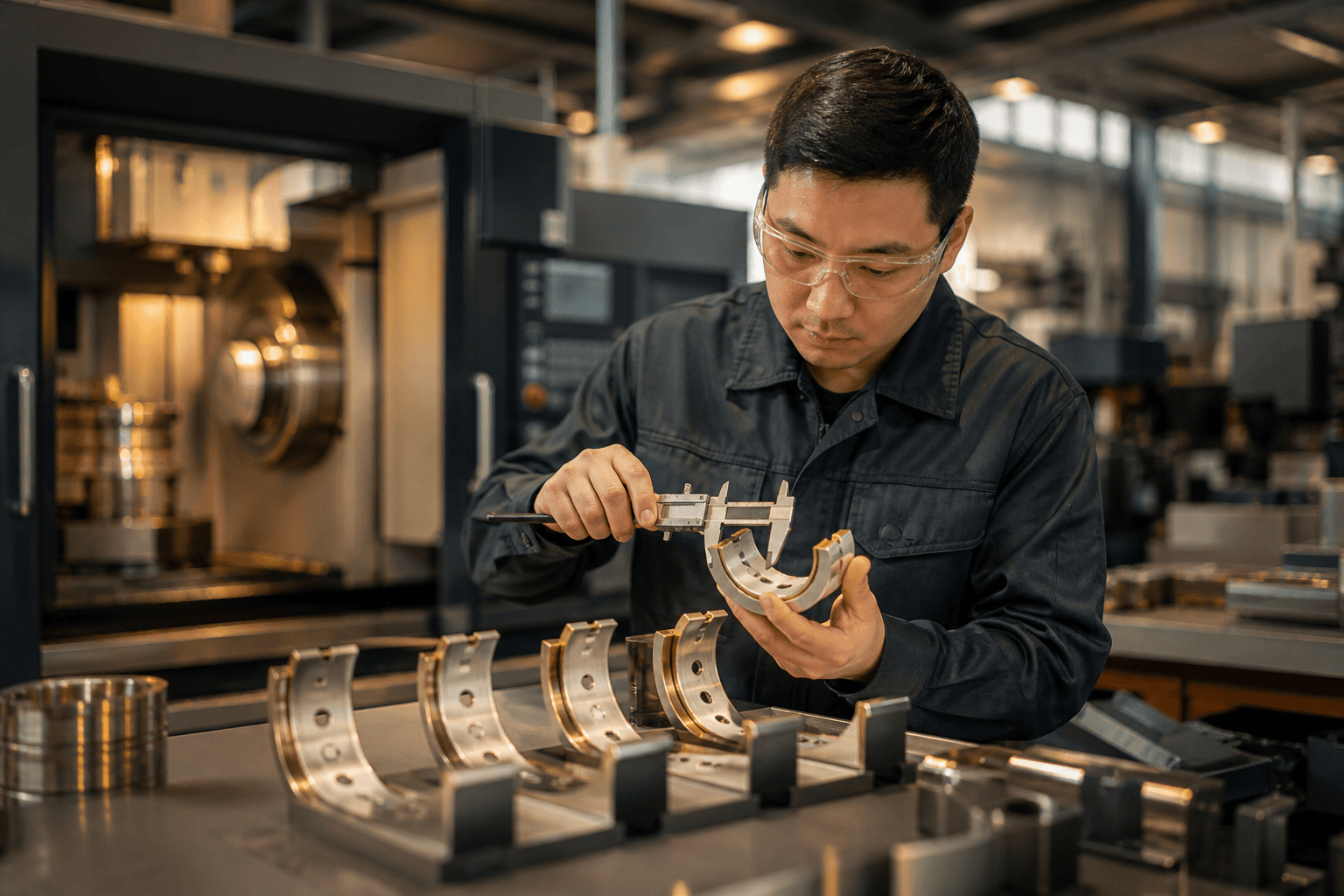
01
Definition of engine type, load profile, lubrication conditions and assembly requirements.
02
Determination of multi-layer structure, overlay and clearance tolerances for operating conditions.
03
Pre-analysis of load capacity, thermal behavior and lubrication margin through engineering calculations.
04
Physical preparation of the selected design through sample or pilot production.
05
Examination of prototype behavior through metallurgical, dimensional and performance-focused tests.
06
Evaluation of field trials and feedback at engine or system level.
07
Transfer of approved design to production process, quality plan and supply chain.
08
Material and design updates driven by field data and new application requirements.
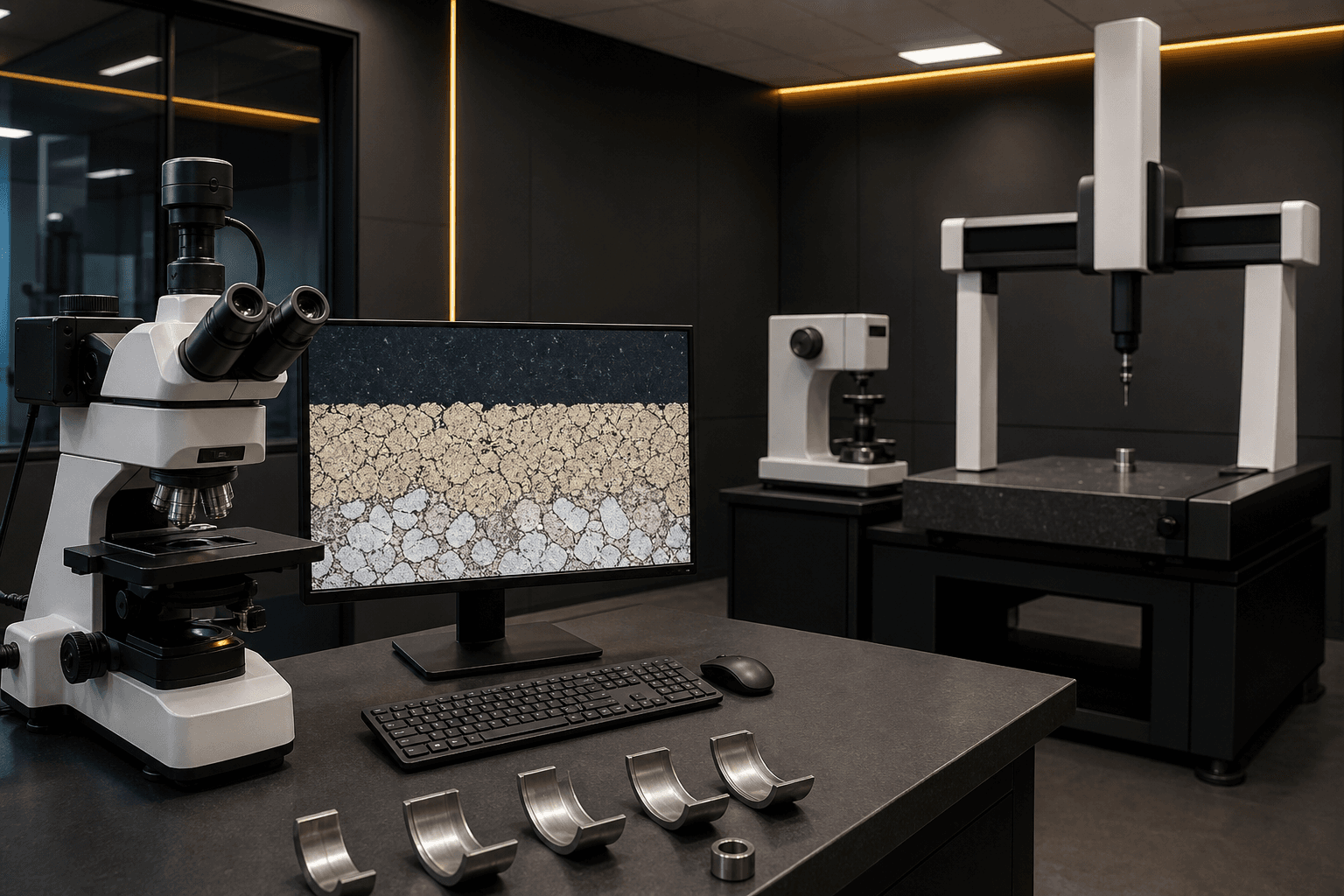
LABORATORY CAPABILITIES
Drawing on validation approaches used in the engine bearing and bushing industry, we conduct material, geometry and performance evaluations within defined test plans.
Examination of overlay thickness, bond interface, grain structure and inclusions.
Verification of critical diameter, thickness, form and surface profile measurements.
Analysis of friction, wear and oil-material interactions for application conditions.
Evaluation of material and semi-finished behavior under repeated load cycles.
Examination of effects of oil type, aging and by-products on bearing surface.
Observation of material stability against moisture, thermal cycles and aggressive environments.

COLLABORATION
Our R&D center is structured not only for internal development but for working together with customer engineering teams.
Joint shaping of bearing and bushing design according to engine manufacturer application requirements.
Definition of custom geometry and material combinations from technical drawings, samples or OEM codes.
Analysis of existing bearing/bushing samples to develop equivalent or improved alternatives.
Joint evaluation of material-lubrication compatibility based on oil type, viscosity and operating temperature.
FOCUS
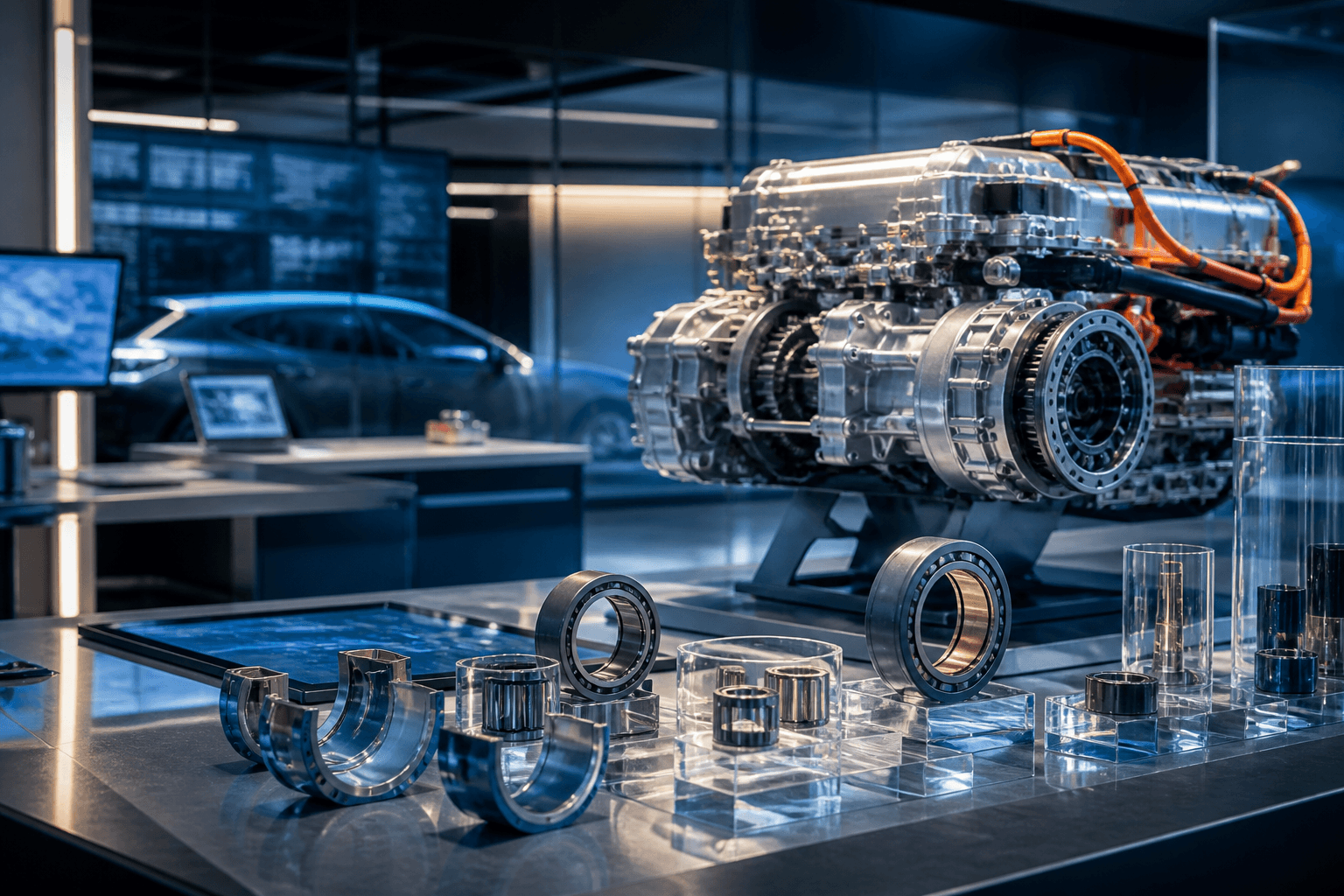
Share your application data; let’s define material, geometry and test plan together.